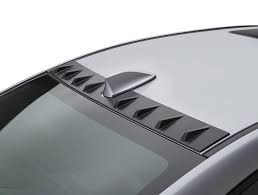
Air never passes over a car in one smooth sheet. It speeds up, slows down, and separates as panels change angle. A vortex generator uses small fins to shape that movement before it becomes unstable. Each fin creates a controlled spiral that energises the nearby airflow. This can help air follow the roofline longer, reduce rear wake turbulence, and give the vehicle a more stable feel at road speed.
Airflow Control
Near the rear roof edge, airflow often loses contact with glass and bodywork. Owners researching a Subaru vortex generator are usually looking at that specific pressure zone. The fins add controlled rotation, keeping the boundary layer active before air reaches the back of the cabin and boot area.
What It Creates
A vortex generator forms a row of small, rotating air streams. Those spirals pull faster moving air down into the slower boundary layer. That exchange gives surface flow extra energy. With better energy, air can remain attached across a curved panel for longer. The effect is modest, but it can influence how smoothly pressure leaves the car.
Why Separation Matters
Separation starts when air can no longer follow a surface. The flow breaks away, and a low-pressure wake expands behind the vehicle. That wake increases drag and can make the rear feel unsettled. Smoother separation gives pressure a more predictable exit. For highway driving, that can mean calmer handling, especially during crosswinds or lane changes.
Roof and Rear Flow
The roof directs the air towards the rear glass. On sedans, hatchbacks, and wagons, that path affects wake size. A generator placed too far forward may lose its effectiveness. One set too far back may miss the boundary layer. Correct position allows each fin to shape the airflow.
Drag Effects
A vortex generator is not a guaranteed drag reduction part. Poorly placed fins can create extra resistance. The useful effect comes from precise, controlled disturbance. When the shape, height, and spacing match the roof profile, wake turbulence can be reduced. Any efficiency gain depends on speed, vehicle form, and surrounding aerodynamic parts.
Stability Benefits
Stability comes from pressure balance, not visual appeal. If rear wake movement becomes less erratic, the car can feel more composed. Drivers may notice this most at freeway speeds or in gusty conditions. This component is not a substitute for good tyres, alignment, suspension condition, or safe driving practices. It simply supports the aerodynamic side of the package.
Styling Value
Many drivers also like the visual change. A roof fin set adds a purposeful detail. Paint-matched pieces keep the finish restrained. Carbon fibre provides a motorsport-inspired look. The best result is the one that sits flush, follows the roof curve, and looks like it was part of the vehicle.
Fitment Checks
Fitment should match the exact model year and roof shape. Small changes in glass angle or panel width can affect placement. Buyers should check adhesive type, base contour, and paint finish before installation. Surface preparation also matters. Wax, dust, or moisture can weaken bonding and allow edges to lift over time.
Material Choices
Common choices include painted plastic, carbon fibre, and composite construction. Painted plastic is ideal for daily use and can easily match factory colours. Carbon fibre costs more, but it offers a lighter structure and premium finish. Composite parts can balance price and durability. The right material should tolerate heat, rain, washing, and ultraviolet exposure without warping or fading prematurely.
Realistic Expectations
It can refine flow, but it will not single-handedly transform performance. Measurable change depends on speed, body shape, placement, and testing method. Components like spoilers, wings, diffusers, ride height, and wheel fitment also affect airflow. Better outcomes come from parts that work as a system.
Maintenance
Care is simple, but neglect can shorten the lifespan of the component. Washing should be performed gently around each fin. Cloth edges can snag on raised corners, so apply only light pressure. Harsh cleaners may damage clear coats, paint, or adhesive. After heat, heavy rain, or long drives, a quick inspection can help you identify any lifting before water or dirt enters the base.
Conclusion
A vortex generator improves airflow by creating controlled spirals that energise the boundary layer over key areas. Its value depends on correct placement, accurate fitment, and the vehicle’s rear. For your builds, the strongest choice combines sound aerodynamics, durable materials, careful installation, and styling that suits the car.